Custom fabrication shops
Fabrication shop software for small custom fab shops
Most fabrication software is written for manufacturers with planners and a scheduling department. ShopJig is for the smaller custom shop where the person quoting also welds, the work is half one-offs, and some of it gets installed or sold online.
The problem
What gets in the way
Quotes from memory
Custom work gets priced on gut feel. If nobody records what each job really took in material and time, the next quote is the same guess.
Paper on the cart, nothing in the system
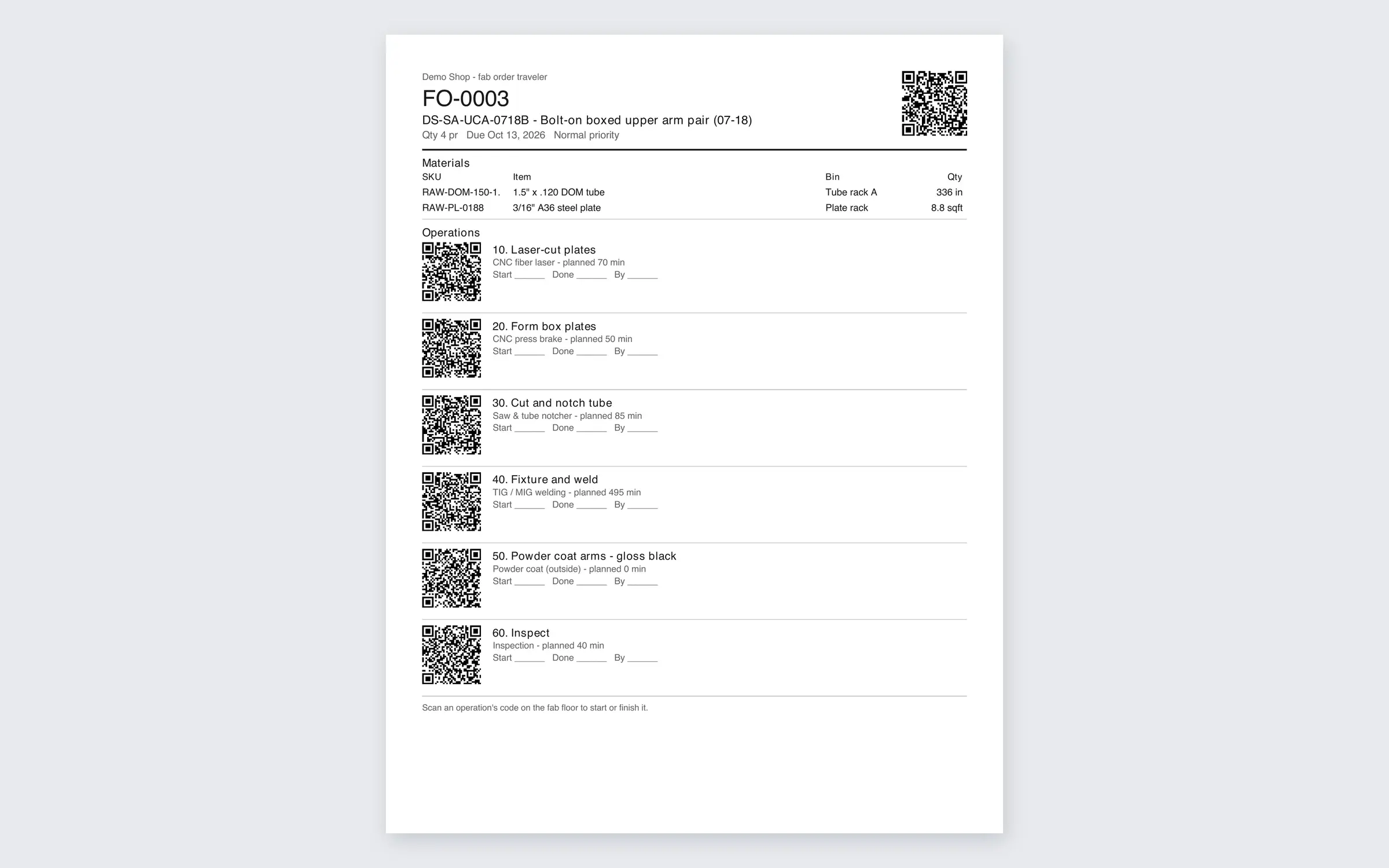
A paper traveler tells the floor what to do, but it can't tell the office where the job is or how long the bends took.
Material bought twice
Drops, remnants and stock nobody knew about sit on the rack while the same tube or sheet gets ordered again for the next job.
One-offs and repeat parts in the same week
A custom bumper and a batch of brackets for the store need different paperwork. Most small shops end up with a spreadsheet for one and a notebook for the other.
How ShopJig handles it
What ShopJig does about it
- 01
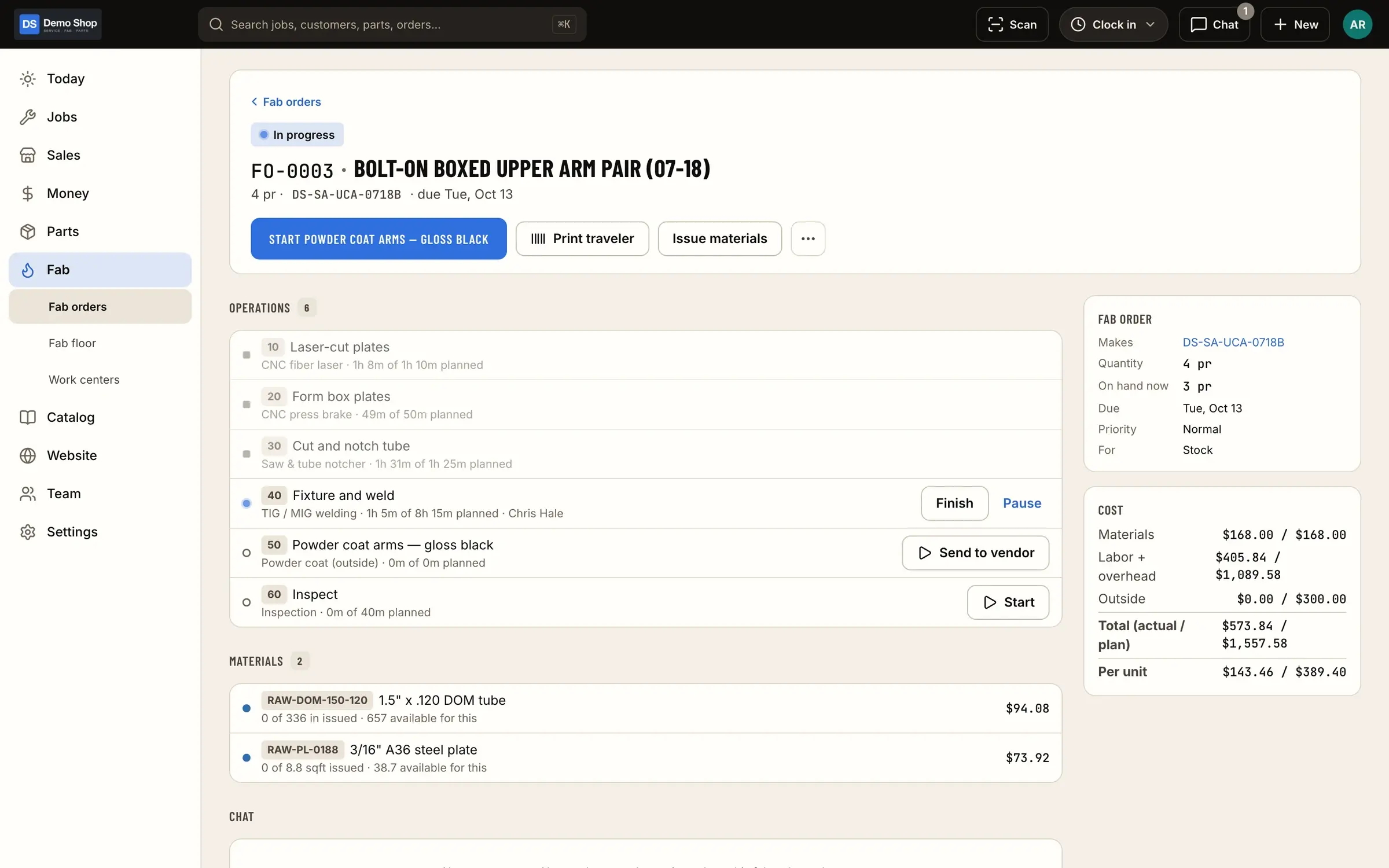
One-off fab orders, no setup
Raise a fab order for a custom job straight from the job, without building a BOM first.
Fab orders & travelers - 02
BOMs and routings for repeat parts
For the parts you make again, define the materials and the operations once. When an order for a built-to-order part is paid, the work order is created from them.
Fab orders & travelers - 03
Travelers with QR codes
Print a traveler that goes with the work. Scanning its QR code brings up the order and the operation on the iPad or phone.
Scanning & labels - 04
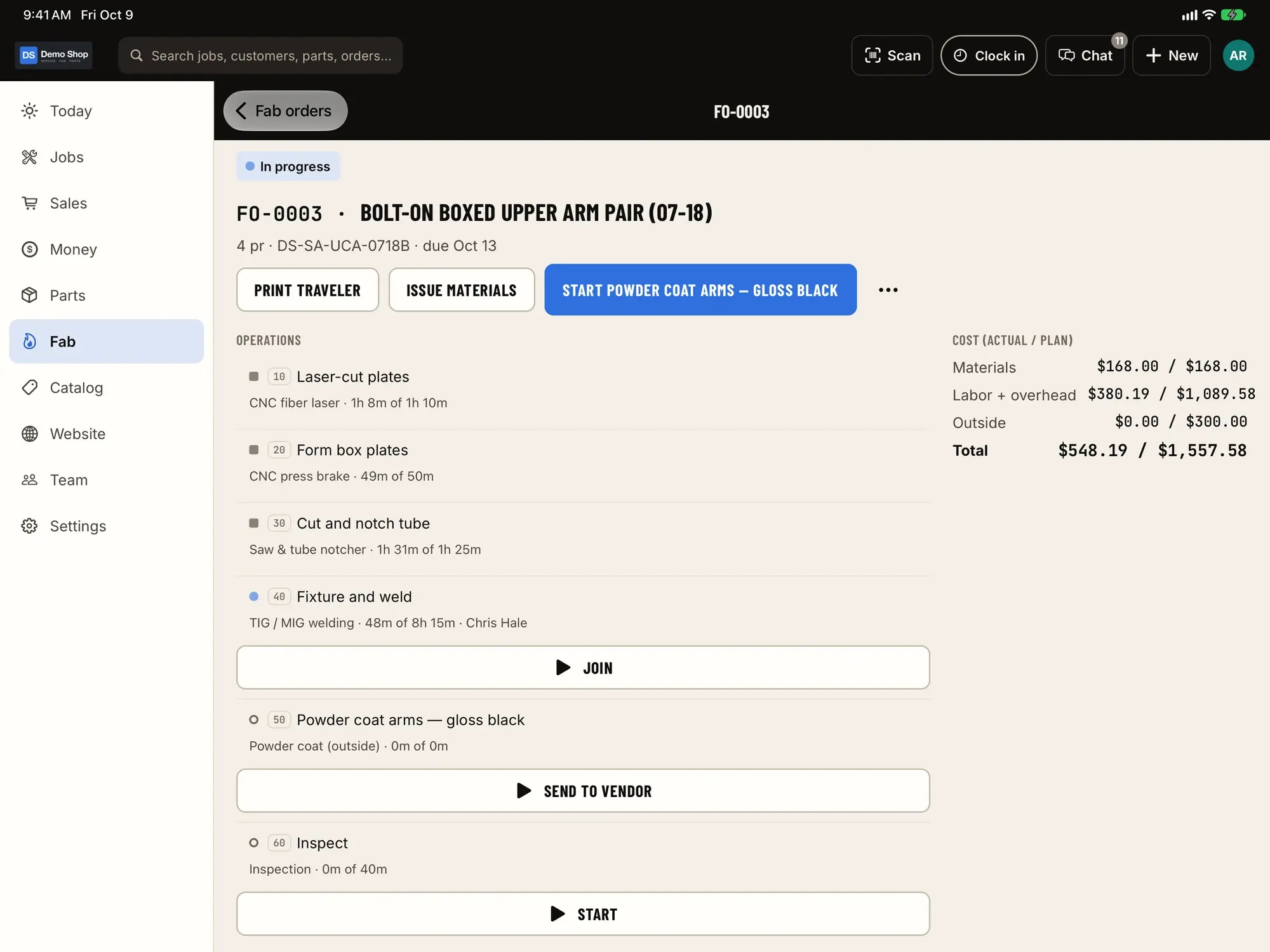
Operation time, inside the day clock
Whoever cuts, bends, welds or coats starts and stops the operation. That time sits inside their clock-in for the day, so it counts for payroll and for the job.
Time clock & payroll - 05
Actual vs standard cost
Material comes out of a costed stock ledger and labor from timed operations, so each fab order shows what it really cost against what it should have.
Parts & inventory - 06
Quotes, invoices and the books
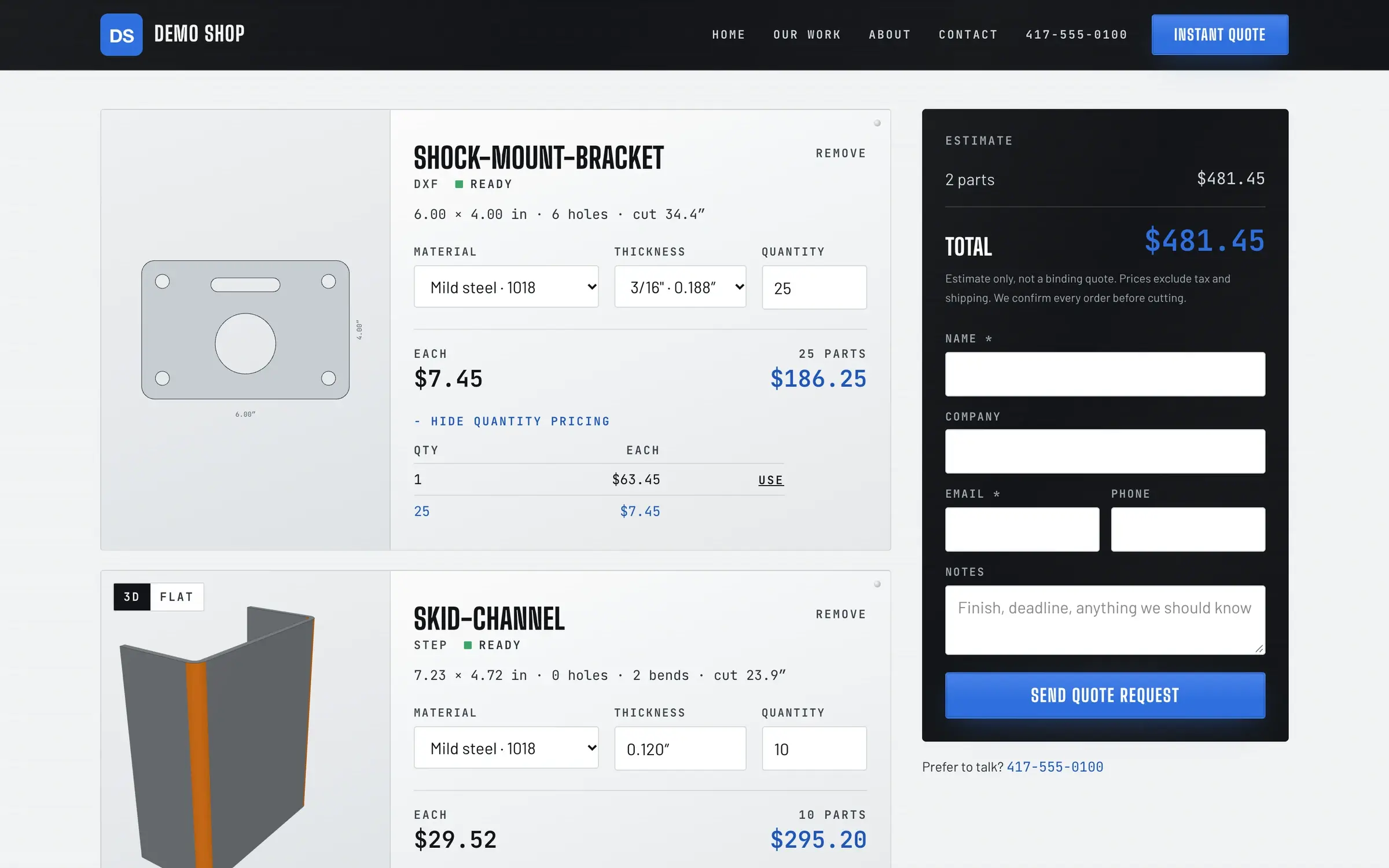
Estimates and deposits up front, an invoice with a pay link at the end, and each day's totals to QuickBooks Online. Cut-and-bend work can be priced instantly from DXF or STEP files.
Estimates, invoices & payments
What it looks like
Real screens from ShopJig, with a demo shop's data and a neutral demo theme.
Is it a fit?
Built in a fab shop
ShopJig was built inside a working off-road fabrication shop that builds custom parts, installs them and sells them online. That’s why fab orders live next to the job board and the online store rather than in a separate manufacturing system, and why the floor runs on an iPad instead of a terminal.
Where it stops
ShopJig suits smaller custom and small-batch shops. It doesn’t do nesting, capacity scheduling, MRP or quality records for AS9100 or ISO work, and it isn’t for structural steel detailing. If those are what you need, a manufacturing ERP will fit better; our comparisons say where each one is strongest.
For the pricing side of cut-and-bend work, see how instant laser quoting works and our guide to pricing laser cutting jobs.
For a walk through a typical day, see Off-road shop software, built in an off-road shop.
The features behind it
Fab orders & travelers
BOMs and routings, work orders from paid orders, shop-floor timing per operation, printable travelers with QR codes and actual vs standard cost. One-off fab orders too.
Learn moreTime clock & payroll
Clock in for the day, log job time inside it, track shop time, handle time-change and time-off requests with approval, run a shared iPad kiosk with PINs, and export payroll with PTO.
Learn moreParts & inventory
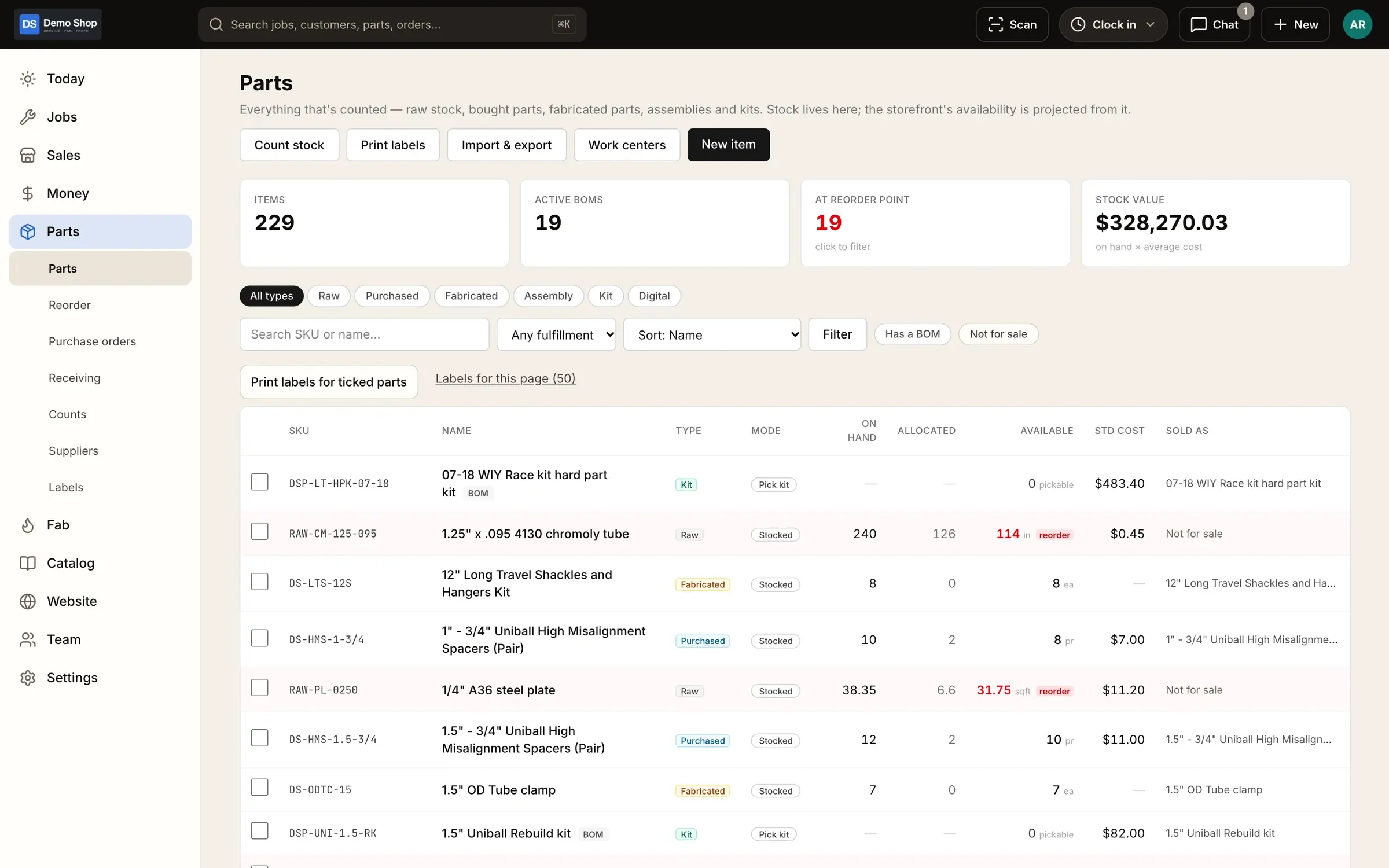
A costed stock ledger with stock by location, counts and reorder points, a "What do we need?" list, purchase orders and receiving, supplier price lists and drop ship.
Learn moreInstant quoting
Customers upload DXF or STEP files and get an instant laser-cutting and press-brake price, from rates your shop sets in an admin.
Learn moreScanning & labels
Scan VINs and barcodes with the camera or a Bluetooth/USB scanner, and print part, bin and 4×6 shipping labels from the phone or the web.
Learn moreEstimates, invoices & payments
Estimates and invoices, a Stripe card reader at the counter, cash, check, Zelle and financing, pay links, a card fee on credit only, gift cards, deposits, credits, refunds with restocking fees, expenses with receipts, and reports with real margins.
Learn moreQuestions
Is ShopJig an ERP or MRP system?
No. It has work orders, BOMs, routings, travelers, operation time, purchasing, invoicing and QuickBooks Online, but no MRP planning, capacity scheduling or quality management system.
Does it work for structural steel?
It isn't built for structural steel detailing or estimating from drawings. It suits custom and small-batch fab work: brackets, bumpers, armor, chassis parts, tube and sheet work.
How do people log time on an operation?
From the iPad or phone on the floor, or by scanning the traveler's QR code. Operation time sits inside each person's clock-in for the day.
Can customers get a price for laser-cut parts online?
Yes, with the instant quoting module, which prices laser cutting and press-brake work from a customer's DXF or STEP file using your rates.
Keep reading
Solutions
- Machine & job shopsWork orders, travelers with QR codes, operation timing and actual vs standard cost, with purchasing, invoicing and QuickBooks Online.
- Performance & build shopsLong builds on one job, custom fab work with real cost, deposits and add-on approvals, parts sold in the shop and online.
- Shop time clockOne clock for attendance and job time, a shared iPad kiosk with PINs, approvals for changes and time off, and payroll export with PTO.
Guides
Early access
Become a founding shop
We're opening ShopJig to a small group of founding shops. You get a walkthrough on your own kind of work, hands-on help getting set up, and a direct line to the people building it. Pricing isn't public yet.